Technology
What is quantum computing?
Quantum computing is a new emerging field that uses quantum mechanics to solve problems beyond the capabilities of present classical computers.
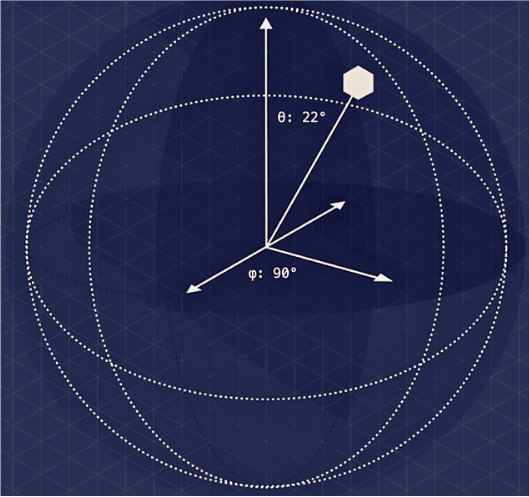
It uses the principle of quantum mechanics, to compute probabilistically and quantum mechanically. Quantum computers encode more data using quantum bits, which are also called qubits using superposition. Classical computers rely on binary bits(zeros and one) to store and process data. A qbit behaves like a bit and stores either zero or one and it can also be a weighted combination of zero and one at the same time, which when combined a qubit in superposition scales exponentially. A four qubit computes 16 pieces of information.
How do quantum computers work?
Quantum computers use qubits instead of bits to store exponentially more information. Qubits process information differently from classical computers. Qubits are made by manipulating and measuring quantum particles like photons, electrons, ions and atoms.
Four key principles of quantum mechanics?
Classical computing versus quantum computing
Quantum computing is based on quantum mechanics which describes the behaviour of subatomic particles.
Classical computing:
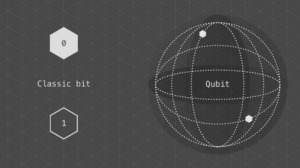
It is used by common computers and devices and stores information in bits with discrete number of possible states in 0 and 1. It process data logically and sequentially.
Quantum computing
It is used by specialized quantum hardware based on quantum mechanics. It stores information in qbits of 0 and 1 or as superpositions of 0 and 1. It process the data with quantum logic.
There are four key principles in order to understand quantum mechanics.
Superposition: Through superposition a combination of multiple possibilities can be represented, instead of one possibility instead of single possibility.
Entanglement: Multiple quantum particles become correlated more strongly.
Decoherence: It is a process in which quantum particles decay, collapse or change to convert into a single state, which can be measured by classical physics.
Interference: It is a process in which entangled quantum states can produce more or less likely probabilities.
Quantum computing use cases
Quantum computing will be used for machine learning and artificial intelligence. New AI models are created in which researchers are pushing for new limits, pushing for a higher computational efficiency. Quantum algorithms can speed up for solving machine learning problems.
Quantum computing can optimize research and development, supply-chain optimization like path planning and in production like decreasing manufacturing process – related costs.
Quantum computing can help to solve some of the most challenging computational problems faced today in fields like chemistry for doing chemical simulations. It can help the scientific community to solve complex problems which require large computational power.
What are the types of quantum technology?
Gate-based ion trap processors
This type is typically based on quantum circuits and it is similar to gate operations in traditional electronics. These gates are different from electronic gates.
Gate-based superconducting processors
These are based on the principles of superconductivity on semiconductor materials like mercury and helium at a very low temperature. Electric current through a loop of superconducting wire flows indefinitely with no power source.
Photonic processors
A quantum photonic processor manipulates light for computations. It uses quantum light
sources emitting squeezed-light pulses, with qubits equivalent to position or momentum.
Neutral atom processors
It is similar to trapped ion technology. It uses light to trap the qubit and hold it in position.
It can operate at room temperature.
Rydberg atom processors
These atoms are away from the nucleus. When these atoms are used as qubits, it offers strong and controllable atomic interactions that can be tuned by selecting different states.
Quantum annealers
Quantum annealing is used to place qubits in absolute energy minimum. Here qubits are larger than the gate-based system. It is used for specific cases only.