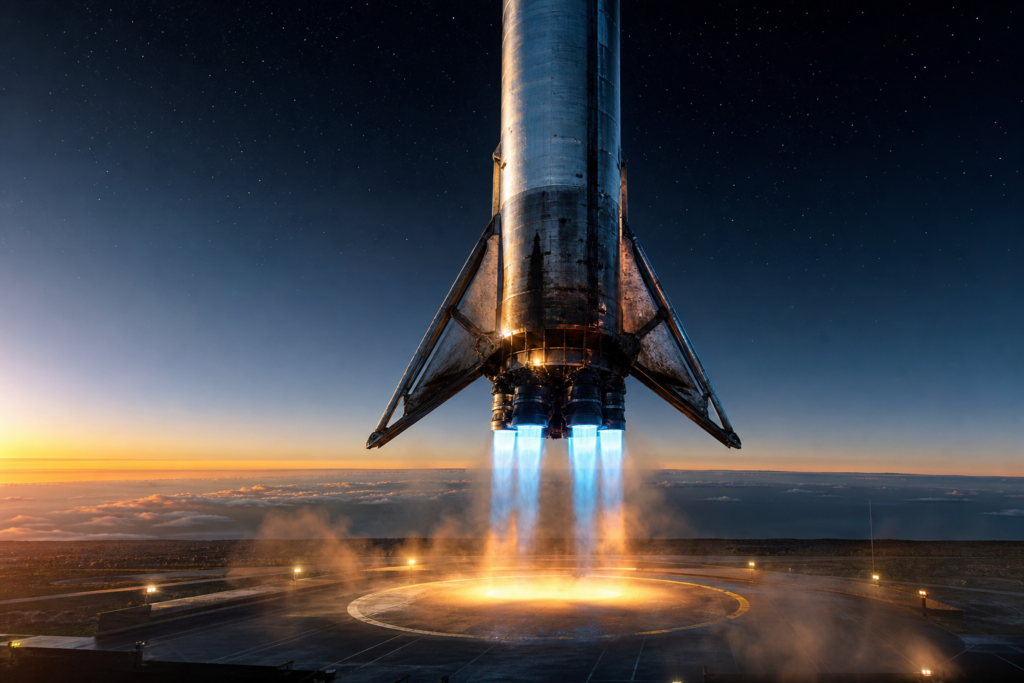
Launch once, land gently, refuel, and fly again: reusable rocket engines are turning that vision into everyday practice. As more vehicles repeat flights, the price and pace of access to orbit are shifting—opening doors for students, researchers, startups, and entire industries.
What is a reusable rocket engine—and how does it work?
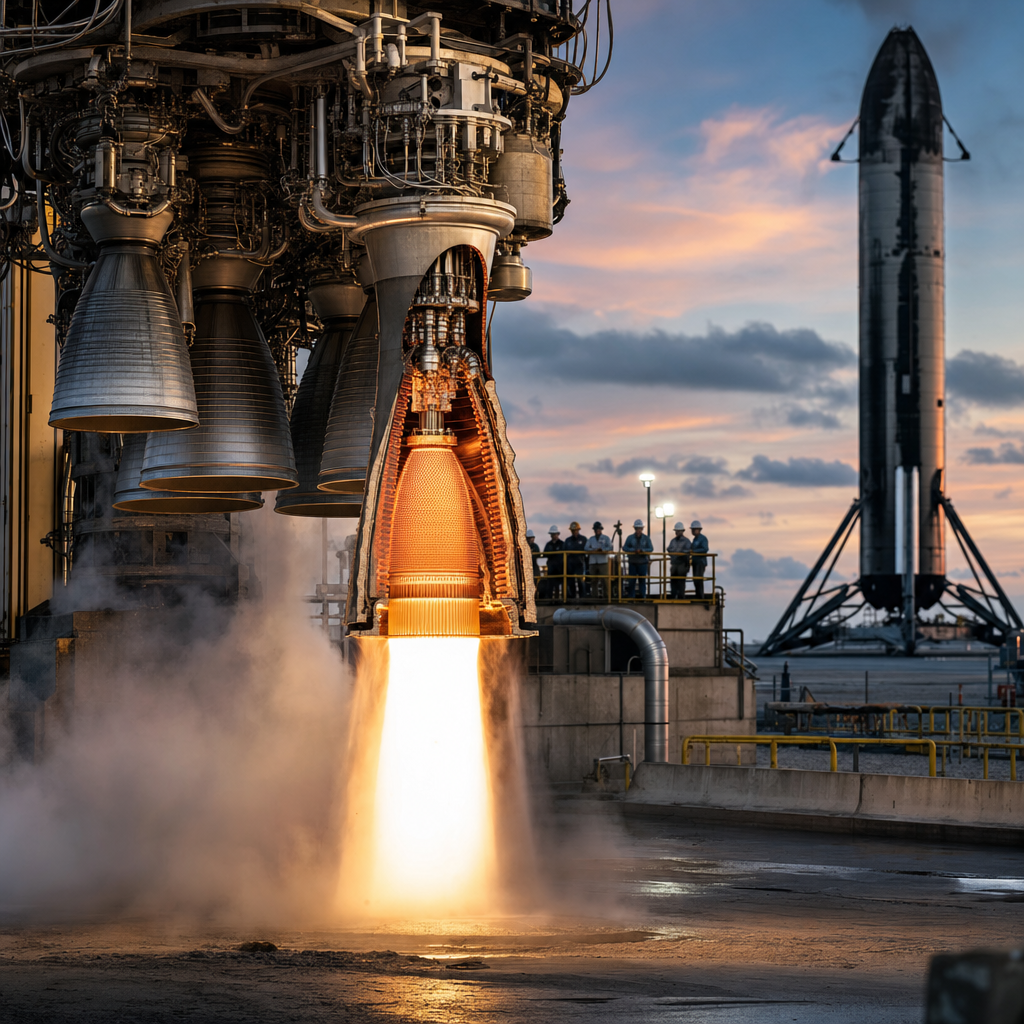
A reusable rocket engine is built to survive multiple launches and landings with minimal refurbishment. Compared with one-time-use engines, it emphasizes durability, precise control, and easy inspection. Key design features include:
- Deep throttling and multiple restarts for landing and trajectory shaping.
- Rugged turbopumps, valves, and seals that tolerate thermal cycles and vibration.
- Efficient cooling (regenerative and film cooling) and strong, heat-resistant materials.
- High-accuracy navigation and guidance so engines can steer a booster back to a safe landing.
How reusable rockets work, end to end
Most current systems reuse the first stage. After liftoff and stage separation, the booster performs a sequence of maneuvers:
- Boostback burn (if needed) to target a landing zone or droneship.
- Reentry burn to reduce heating and loads.
- Landing burn and vertical landing with deployable legs.
Other recovery concepts exist. For example, winged vehicles aim for runway landings (as tested by ISRO’s RLV-LEX program), while some teams have explored midair capture and partial reuse strategies.
Turnaround time and refurbishment
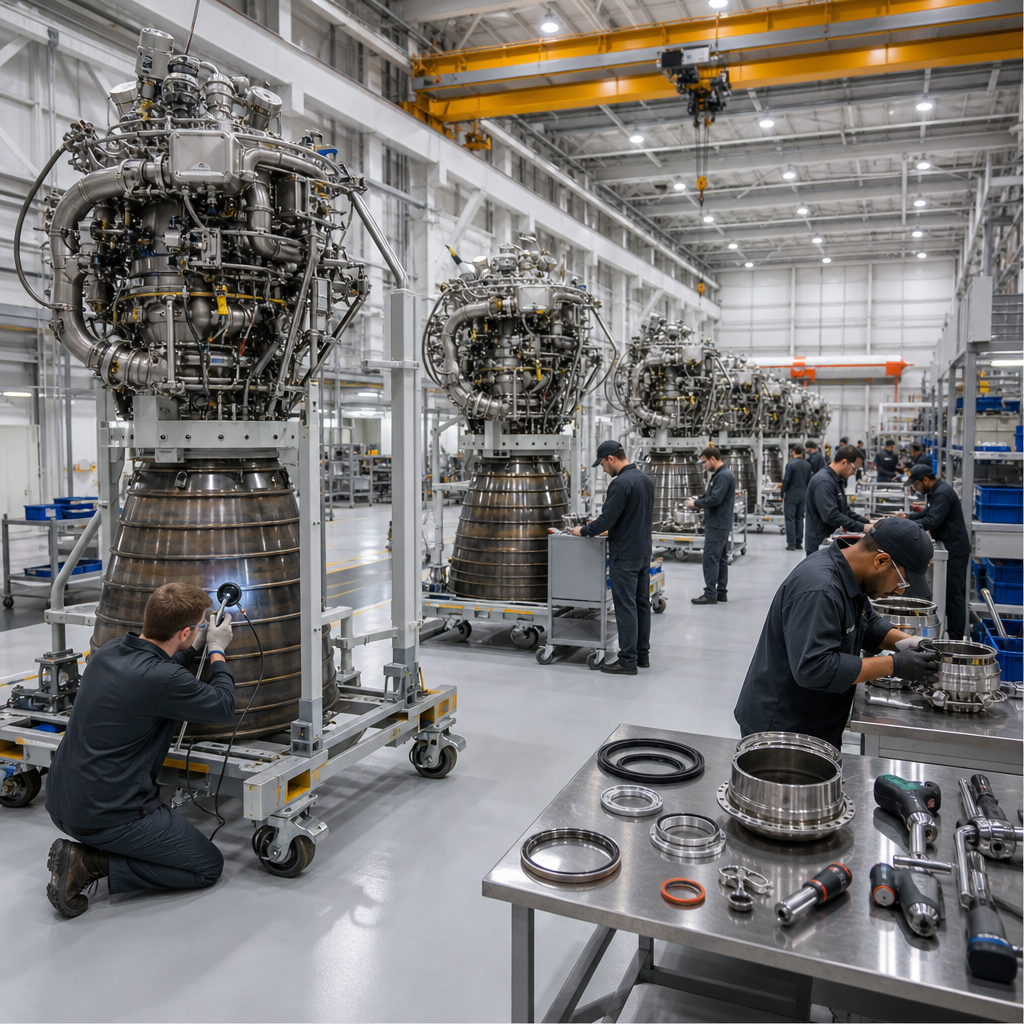
Turnaround—the time from one flight to the next—depends on post-flight checks, part lifetimes, and the launch manifest. Today’s reusable boosters often turn around in weeks, and in some cases days, after inspections, engine health reviews, and minor part replacements. Notably, SpaceX demonstrated deep reusability with a Falcon 9 booster reaching its 35th flight and landing on June 8, 2026 (see Spaceflight Now coverage).
Reusable vs. expendable rockets
| Aspect | Reusable Rockets | Expendable Rockets |
|---|---|---|
| Hardware recovery | First stage (and often fairings) returned, inspected, flown again | All stages discarded after one flight |
| Landing method | Vertical landing rockets or runway landing concepts | None |
| How reusable rockets work | Relight engines, throttle precisely, guided return and touchdown | Single-use ascent profile only |
| Turnaround time | Days to weeks, improving with experience | N/A (new hardware each mission) |
| Cost drivers | Refurbishment, operations, propellant, range services | New hardware manufacturing + operations |
| Risk/complexity | More complex flight and landing sequence | Simpler mission profile; more manufacturing |
Who is leading reusable rocket technology today?
- SpaceX — Falcon 9’s reusable first stage reached 35 reflights (June 8, 2026). Starship flight testing (2024–2025) uses methane-fueled Raptor engines toward a fully reusable heavy-lift system relevant to NASA’s Human Landing System plans.
- Blue Origin — New Glenn reached orbit on Jan 16, 2025. Its seven BE‑4 methane engines power a first stage designed for reuse with a multi‑flight target.
- ULA — Vulcan flew certification missions in 2024 using BE‑4 engines, expanding flight heritage for modern methalox engines. Vulcan’s first stage is not recovered.
- Rocket Lab — Progressing toward the reusable, medium‑lift Neutron; the fixed, reclosable fairing was qualified in Dec 2025. Electron reflight testing informs engine and recovery know‑how.
- Europe (ArianeGroup/ESA) — Prometheus (methalox) and Themis stage demonstrator advanced under the SALTO program, with hardware shipped to Esrange for hop tests.
- India (ISRO) — RLV‑LEX achieved multiple autonomous runway landings (2024–2025), maturing guidance, navigation, and control for winged recovery concepts.
- China (LandSpace) — Zhuque‑3 advanced with a 350 m VTVL hop (2024), a nine‑engine static fire (June 20, 2025), and a first‑stage recovery test campaign announced for 2026.
How much cheaper is a reusable launch?
Exact prices per kilogram or per launch vary and are often undisclosed. In general, reusing the most expensive hardware—the first stage and fairings—can reduce marginal hardware costs and support higher launch cadence. Overall mission cost still includes integration, operations, propellant, and range services. The net result is a meaningful reduction compared with comparable one-time-use rockets, especially as fleets accumulate reflights and streamline inspections.
Methane vs. kerosene—and the environment
- Methane (CH4): Tends to produce less soot than kerosene, helping engines stay cleaner across many cycles and enabling precise restarts—important for vertical landing rockets.
- Kerosene (RP‑1): High energy density and strong heritage; however, it can leave more carbon deposits in engines, complicating repeated use.
Environmental impact of rocket launches remains an active research and regulatory topic. Even with cleaner-burning fuels, emissions (including black carbon in the upper atmosphere), noise, and local ecological effects are closely monitored. As flight rates increase, data‑driven standards and mitigation strategies are likely to evolve.
Practical use-case: a small Earth-observation startup
Imagine a startup planning a 120 kg imaging satellite. Reusable launchers enable:
- Flexible manifests: Choose a rideshare or dedicated small launch based on target orbit and schedule.
- Budget resilience: Lower marginal costs and frequent flights reduce delays and carrying costs if you miss a window.
- Rapid iteration: Frequent launch opportunities let you refresh sensors yearly, improving image quality and data products.
- Risk management: Proven reusable fleets provide extensive flight heritage; insurance and test options evolve alongside.
What lower launch costs could mean
- Satellites: More affordable deployment of constellations, better revisit rates, and broader access for universities and smaller nations.
- Research: Faster technology cycles, more suborbital and orbital experiments, and diversified mission profiles.
- Entrepreneurship: New geospatial, IoT, and communications services as entry barriers fall.
- Space tourism: While still premium, reuse can enable more flights and maturing safety practices.
Risks and challenges
- Engineering limits: Engine cycles, thermal fatigue, and structural wear must be understood and tracked.
- Operations: Weather, sea states (for droneship landings), and range availability can drive delays.
- Upper-stage reuse: Still experimental across the industry; most operational reuse today is first stages and fairings.
- Environment and safety: Emissions, noise, and debris mitigation are under scrutiny as flight rates rise.
- Supply chain: Advanced alloys, additive manufacturing, and quality control must scale reliably.
Future outlook
The near term points to higher-cadence, lower-cost access driven by reusable first stages and more robust engines. SpaceX is iterating toward fully reusable heavy lift with Starship; Blue Origin’s New Glenn is ramping after reaching orbit; Rocket Lab’s Neutron, Europe’s Themis/Prometheus, ISRO’s winged RLV experiments, and LandSpace’s methalox developments broaden global capability. Expect gradual reductions in turnaround time, more precise landings, and expanding mission classes—while environmental standards and safety frameworks mature in parallel.
Reusable Engine Trends Shaping Launch Costs
This visual uses relative trend strength, not exact market statistics.
Regional momentum in reusable engine development
A simple regional view of where this trend can create impact.
High-cadence booster landings, deep supplier base, strong private demand accelerating reuse counts
Active prototypes and test ranges; policy support for competitive reusability and shared infrastructure
State-backed and commercial methalox engines advancing; multiple new coastal launch complexes
Emerging rideshare markets and tracking sites; interest in small spaceports and engine test corridors
How reusability drives lower-cost access to space
-
Now
Booster reusability is routine; engines gain life through streamlined refurbishment, better throttling, and improved durability; costs fall on high-volume missions -
Next 2-3 years
Higher certified reuse cycles and faster pad turnaround; partial reusability of upper stages and fairings expands; broader commercial rideshare and methane logistics mature -
Long term
Fully reusable two-stage systems and orbital refueling standards; global spaceport network enables airline-like cadence; financing and insurance normalize reflight risk with cleaner propellants and noise mitigation
FAQ
What is a reusable rocket engine and how does it work?
It is an engine designed to fly, land, and fly again. It features restart capability, deep throttling, robust cooling, and durable components so it can handle multiple thermal and mechanical cycles.
How do reusable rockets land and get ready to fly again?
They perform boostback, reentry, and landing burns to touch down vertically or, in some concepts, glide to a runway. Post-flight, teams inspect engines and structures, replace limited‑life parts, and prepare for the next mission—often in weeks, sometimes days.
How much cheaper is a reusable launch compared to a one‑time‑use rocket?
Operators avoid building a new first stage and fairings each time, which can substantially lower marginal hardware costs. Exact figures vary by provider and mission and are rarely public; total cost still includes operations, integration, propellant, and range services.
Further reading
- Falcon 9 booster reaches 35th flight (Spaceflight Now)
- Starship Flight Test overview (SpaceX)
- New Glenn reaches orbit (Blue Origin)
- BE‑4 engine overview (Blue Origin)
- ULA Vulcan Cert‑2 successful (ULA Newsroom)
Want more broad tech insights beyond space? Explore CodDesire’s Technology Page or browse our recommended Books.