
C++ type casting for beginners can feel confusing at first, but with a few simple rules and examples you’ll quickly get comfortable making safe, clear conversions. In modern C++, we prefer the four named casts—static_cast, dynamic_cast, const_cast, and reinterpret_cast—because they tell readers and the compiler exactly what you intend. This page explains what type casting is, when to use each cast, and common mistakes to avoid. If you’re just getting started with C++, you may also like our main C++ tutorials at CodDesire C++.
What is type casting in C++ and why is it used?
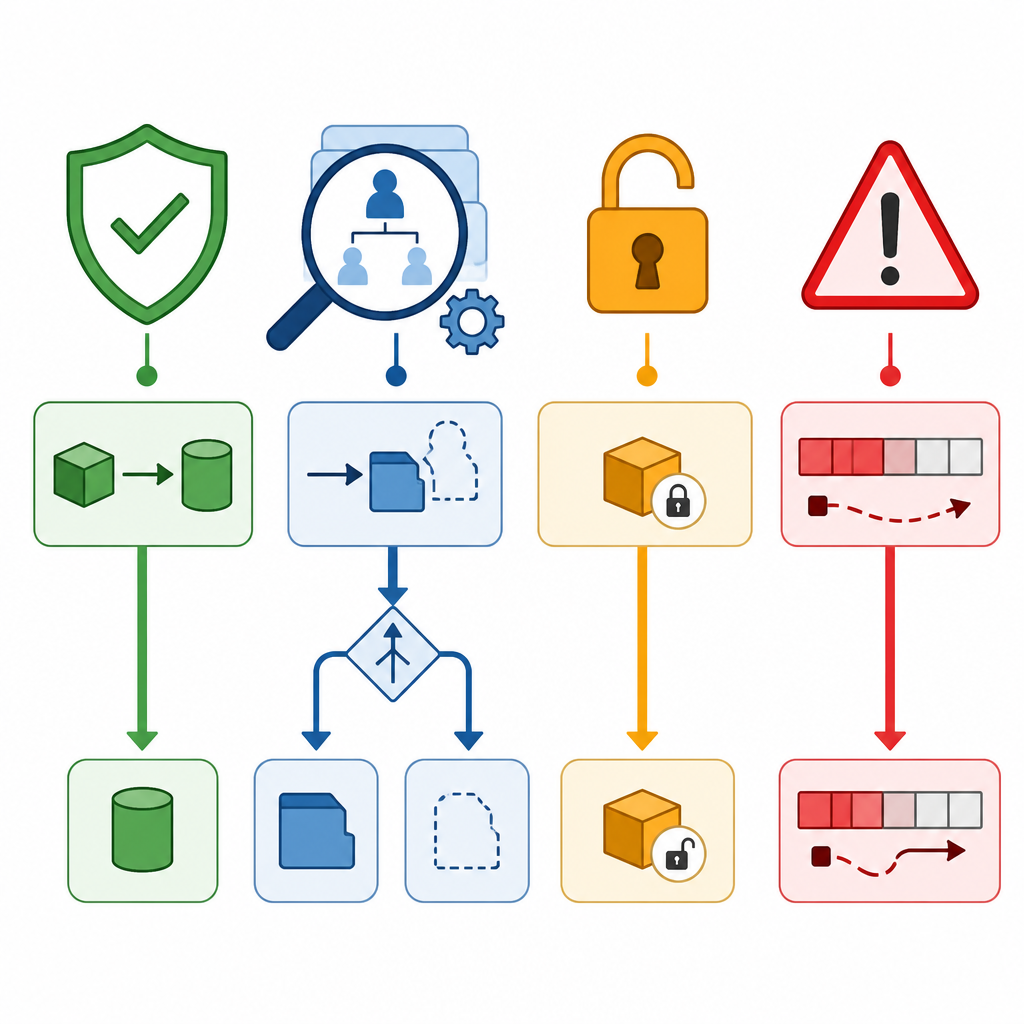
Type casting (type conversion) means turning a value of one type into another. You might cast to:
- Convert between numeric types (e.g.,
doubletoint). - Work with class hierarchies (base/derived pointers and references).
- Adjust const-qualification when interacting with old APIs.
- Perform low-level tasks like reading bytes of an object (advanced; rarely needed for beginners).
C++ lets some conversions happen automatically (implicit conversions), but others must be explicit to stay safe and clear. Named casts make intent obvious to both readers and tools, leading to safer code for students and beginners.
Quick numeric example
#class="cd-package">include <iostream>
int main() {
    double d = 3.7;
    int i = static_cast<int>(d); // explicit, clear numeric conversion
    std::cout << "d = " << d << ", i = " << i << 'n';
}d = 3.7, i = 3Overview of the C++ casts

C++ provides four named casts you’ll use in different situations. As a beginner, choose the narrowest, safest cast that matches your intent.
| Cast | Purpose | Runtime checks | Changes const? | Typical use |
|---|---|---|---|---|
static_cast |
Compile-time conversions | No runtime check | No | Numeric conversions, upcasts |
dynamic_cast |
Safe runtime-checked casts across polymorphic classes | Yes (requires virtual function in base) | No | Downcasting pointers/references safely |
const_cast |
Add/remove const/volatile at the same level | No runtime check | Yes (cv-qualification only) | Interop with legacy APIs that wrongly use non-const |
reinterpret_cast |
Low-level bit/pointer reinterpretation | No runtime check | No | Very advanced/rare; prefer safer alternatives |
Which cast should I use? Beginner decision flow
static_cast. It is clear and compile-time checked.dynamic_cast (base must have a virtual function). Pointers return nullptr if the cast fails; references throw.const_cast for API interop only. Never modify truly const objects.reinterpret_cast with great care; prefer std::bit_cast or std::memcpy when possible.static_cast: when to use it (beginner guide)
Use static_cast for conversions the compiler can check at compile time. It does not add runtime checks, so it’s not for risky downcasts in class hierarchies. Good uses include:
- Numeric conversions (e.g., double to int).
- Upcasting a derived pointer/reference to a base (though that’s often implicit).
- Calling explicit constructors or conversion operators clearly.
Example: numeric conversion
#class="cd-package">include <iostream>
int main() {
    double pi = 3.14159;
    int truncated = static_cast<int>(pi); // truncates toward zero
    std::cout << "pi: " << pi << ", truncated: " << truncated << 'n';

    // Be careful with narrowing:
    long long big = 12345678901LL;
    int maybeLose = static_cast<int>(big); // might lose data
    std::cout << "maybeLose: " << maybeLose << 'n';
}pi: 3.14159, truncated: 3
maybeLose: 191227617Example: upcasting a derived object to base
Upcasts are safe and usually implicit, but using static_cast can make intent explicit.
#class="cd-package">include <iostream>
struct Base { virtual ~Base() = default; };
struct Derived : Base { void hello() const { std::cout << "Hello from Derivedn"; } };

int main() {
    Derived d;
    Base* pb = static_cast<Base*>(&d); // upcast (also works without the cast)
    // pb points to the Base part of d; we cannot call Derived-only functions via pb.
    std::cout << "Upcast done.n";
}Upcast done.Important: Do not use static_cast for risky downcasts (Base* to Derived*) unless you are absolutely sure of the dynamic type. There is no runtime check, so a wrong cast leads to undefined behavior if you use the result incorrectly.
dynamic_cast: how it works with polymorphism
Use dynamic_cast for safe downcasting when working with polymorphic classes (the base class must have at least one virtual function, often a virtual destructor). dynamic_cast performs a runtime check using RTTI:
- Casting a pointer returns
nullptron failure. - Casting a reference throws
std::bad_caston failure. - Requires RTTI; avoid compiling with RTTI disabled if you need
dynamic_cast.
Example: safe downcast with dynamic_cast
#class="cd-package">include <iostream>
#class="cd-package">include <vector>

struct Base {
    virtual ~Base() = default; // polymorphic base (required)
};

struct Derived : Base {
    void speak() const { std::cout << "I am Derivedn"; }
};

int main() {
    Base* b1 = new Base{};
    Base* b2 = new Derived{};

    if (auto* d = dynamic_cast<Derived*>(b1)) {
        d->speak();
    } else {
        std::cout << "b1 is not a Derivedn";
    }

    if (auto* d = dynamic_cast<Derived*>(b2)) {
        d->speak(); // OK
    } else {
        std::cout << "b2 is not a Derivedn";
    }

    delete b1;
    delete b2;
}b1 is not a Derived
I am DerivedTip for beginners: Regular, frequent downcasts can be a design smell. Consider redesigning with virtual functions, visitors, or other polymorphic techniques instead of casting often.
const_cast and reinterpret_cast explained
const_cast: add/remove const carefully
Use const_cast only to adjust const-qualification at the same level, most often when calling legacy APIs that take a non-const pointer but promise not to modify the data. Never write through a pointer/reference produced by removing const if the original object was actually const—doing so is undefined behavior.
Example: interop with a legacy API that doesn’t modify data
#class="cd-package">include <iostream>
#class="cd-package">include <string>

// A legacy function that should have taken ___CDPHSTR0___ but didn't.
void legacy_print(char* p) {
    // We promise not to modify *p. Just print it.
    std::cout << p << 'n';
}

int main() {
    std::string s = "Hello, legacy!";
    // Safe only because legacy_print does not modify the data.
    legacy_print(const_cast<char*>(s.c_str()));
}Hello, legacy!Do not use const_cast to circumvent const-correctness in your own code. Prefer fixing function signatures to accept const where appropriate.
reinterpret_cast: low-level and rarely needed
Use reinterpret_cast only when you truly need low-level, implementation-dependent behavior. It reinterprets the bits of a value or pointer—there is no guarantee of meaningful conversion. Beginners should avoid it unless they understand alignment and aliasing rules. In general, prefer safer alternatives such as std::bit_cast (C++20) or std::memcpy for type-punning.
Example 1: show an address as an integer (do not dereference after conversion)
#class="cd-package">include <iostream>
#class="cd-package">include <cstdint>

int main() {
    int x = 42;
    void* p = &x;
    std::uintptr_t addr = reinterpret_cast<std::uintptr_t>(p);
    std::cout << "Address: " << addr << 'n';
}Address: 140735713087164 // value will differ on your systemExample 2: safely view object bytes using unsigned char
Accessing the bytes of any object via unsigned char* is allowed. This can be useful for simple inspections.
#class="cd-package">include <iostream>

int main() {
    int x = 0x12345678;
    const unsigned char* bytes = reinterpret_cast<const unsigned char*>(&x);
    std::cout << "First byte: " << static_cast<int>(bytes[0]) << 'n';
}First byte: 120 // may vary with endiannessSafer alternatives and best practices for learners
- Prefer named casts to C-style casts because they express intent and limit what’s allowed.
- Choose the narrowest cast that fits your goal:
static_castfor normal conversions (numeric, upcasts).dynamic_castfor checked downcasts in polymorphic hierarchies.const_castonly for const-qualification interop; do not use to modify const objects.reinterpret_castonly when you absolutely need low-level reinterpretation.
- For type-punning or bit-level views, prefer
std::bit_cast(C++20) orstd::memcpy. - Be explicit with potentially lossy numeric conversions. Consider utilities like
gsl::narrowin student projects to catch narrowing in debug builds. - If you often need downcasts, rethink your class design (more virtual functions, visitors, or composition).
Example: std::bit_cast (C++20)
#class="cd-package">include <iostream>
#class="cd-package">include <bit>       // C++20
#class="cd-package">include <cstdint>

int main() {
    float f = 1.0f;
    std::uint32_t u = std::bit_cast<std::uint32_t>(f);
    std::cout << "Bit pattern of 1.0f: " << u << 'n';
}Bit pattern of 1.0f: 1065353216Beginner checklist before casting
- Prefer named casts; avoid C-style casts in new code.
- For downcasts, ensure the base type is polymorphic (has a virtual function) before using
dynamic_cast. - Check for
nullptrafterdynamic_caston pointers; handlestd::bad_castfor references if needed. - Make lossy numeric conversions explicit with
static_cast; review for narrowing. - Only use
const_castwhen the underlying object is non-const and the callee will not modify it. - Avoid dereferencing pointers produced by
reinterpret_castunless the aliasing/alignment rules permit it. - Prefer alternatives: virtual functions/overloads,
std::variant/std::visit,std::bit_cast, orstd::memcpy. - Document why the cast is necessary; future you and reviewers will thank you.
C-style cast vs C++ named casts
A C-style cast like (int)x or function-style cast int(x) can perform a mixture of conversions (like static_cast, const_cast, and even reinterpret_cast), which makes it hard to read and risky. Modern C++ encourages named casts for clarity.
Example: C-style cast hides intent
#class="cd-package">include <iostream>
int main() {
    double value = 5.9;
    // Both compile, but the second is clearer for readers and tools:
    int a = (int)value;                 // C-style: what exactly happens?
    int b = static_cast<int>(value);    // C++-style: explicit numeric conversion
    std::cout << a << " " << b << 'n';
}5 5Also, C-style casts can silently remove const, which is dangerous. With named casts, you must write const_cast explicitly, so reviewers immediately notice and question it.
Relative clarity and safety for beginners (qualitative)
dynamic_cast — checked downcasts in polymorphic codestatic_cast — numeric conversions, upcastsconst_cast — cv-qualification adjustments onlyreinterpret_cast — low-level, avoid if unsureCommon mistakes and how to fix them
- Using
static_castto downcast across a class hierarchy. Fix: usedynamic_castwith a polymorphic base, or redesign to avoid downcasting. - Assuming
dynamic_castalways throws. Fix: remember that pointer casts returnnullptron failure; references throwstd::bad_cast. - Calling
dynamic_castwithout a virtual function in the base. Fix: add a virtual destructor (or other virtual function) to make the base polymorphic. - Modifying data after removing const via
const_cast. Fix: never write through a casted pointer unless the original object was non-const. - Using
reinterpret_castto convert unrelated pointer types and then dereferencing. Fix: avoid this; it can violate aliasing/alignment rules and is not portable. - Silently narrowing numbers. Fix: use
static_castintentionally, and consider checks in debug builds.
C++ casting examples for students: practice snippet
#class="cd-package">include <iostream>

struct Shape {
    virtual ~Shape() = default;
    virtual void draw() const { std::cout << "Shape::drawn"; }
};
struct Circle : Shape {
    void draw() const override { std::cout << "Circle::drawn"; }
    void radius() const { std::cout << "radius() specific to Circlen"; }
};

void render(const Shape& s) {
    s.draw();
    // Try to call Circle-specific method if s is actually a Circle:
    if (auto pc = dynamic_cast<const Circle*>(&s)) {
        pc->radius();
    }
}

int main() {
    Circle c;
    Shape& rs = c;
    render(rs); // dynamic_cast succeeds and calls radius()
}Circle::draw
radius() specific to CircleFAQ: C++ type casting for beginners
What is type casting in C++ and why is it used?
It’s converting a value from one type to another. You use it for numeric conversions, working with class hierarchies, adjusting const-qualification for legacy APIs, and (rarely) low-level tasks. Named casts make conversions explicit and safer for learners.
When should I use static_cast instead of dynamic_cast?
Use static_cast for ordinary compile-time conversions like numeric changes or upcasts. Use dynamic_cast when you need a runtime-checked downcast in a polymorphic class hierarchy (base has a virtual function).
Is const_cast safe to use in C++ for beginners?
It’s safe only when used to fix API mismatches where the function does not modify the data. Never remove const to modify an object that was originally const—this is undefined behavior.
What does reinterpret_cast do and when should I avoid it?
It reinterprets bits/pointers without changing them, which is highly low-level and platform-dependent. Beginners should avoid it except for rare cases (like viewing bytes). Prefer std::bit_cast (C++20) or std::memcpy for type-punning.
How is a C-style cast different from C++ casts like static_cast?
A C-style cast can perform multiple kinds of conversions silently, making it harder to read and review. C++ named casts (static_cast, dynamic_cast, const_cast, reinterpret_cast) are explicit about intent and generally safer for students.
Sources / Further reading
- cppreference: Explicit type conversion
- cppreference: static_cast
- cppreference: dynamic_cast
- cppreference: const_cast
- cppreference: reinterpret_cast
- cppreference: std::bit_cast (C++20)
- Microsoft Learn: Casting operators
- C++ Core Guidelines (Type rules, ES.46/ES.49)
If you found this simple guide on C++ static_cast vs dynamic_cast, const_cast and reinterpret_cast helpful, continue learning in our beginner-friendly C++ tutorials. Keep practicing safe type conversions in C++—it’s a powerful habit that will help you avoid bugs and write clearer programs.