
Machine learning has become one of the most exciting and rapidly evolving fields in technology today. Whether you’re a student eager to understand how artificial intelligence works, a beginner looking to start a career in data science, a developer exploring new tools, or a small business owner aiming to leverage AI for your operations, understanding machine learning algorithms is essential. This easy guide to machine learning algorithms for students and beginners breaks down the essentials, making machine learning basics accessible and practical.
What Are Machine Learning Algorithms?

Machine learning algorithms are a set of mathematical instructions that enable computers to learn from data and make decisions without being explicitly programmed for every task. They are the foundation of teaching machines how to identify patterns, predict outcomes, and improve over time through experience—much like humans do.
For those new to the field, understanding machine learning begins with grasping these core concepts, as they dictate how AI systems solve problems, from recommending products to diagnosing diseases.
Types of Machine Learning Algorithms
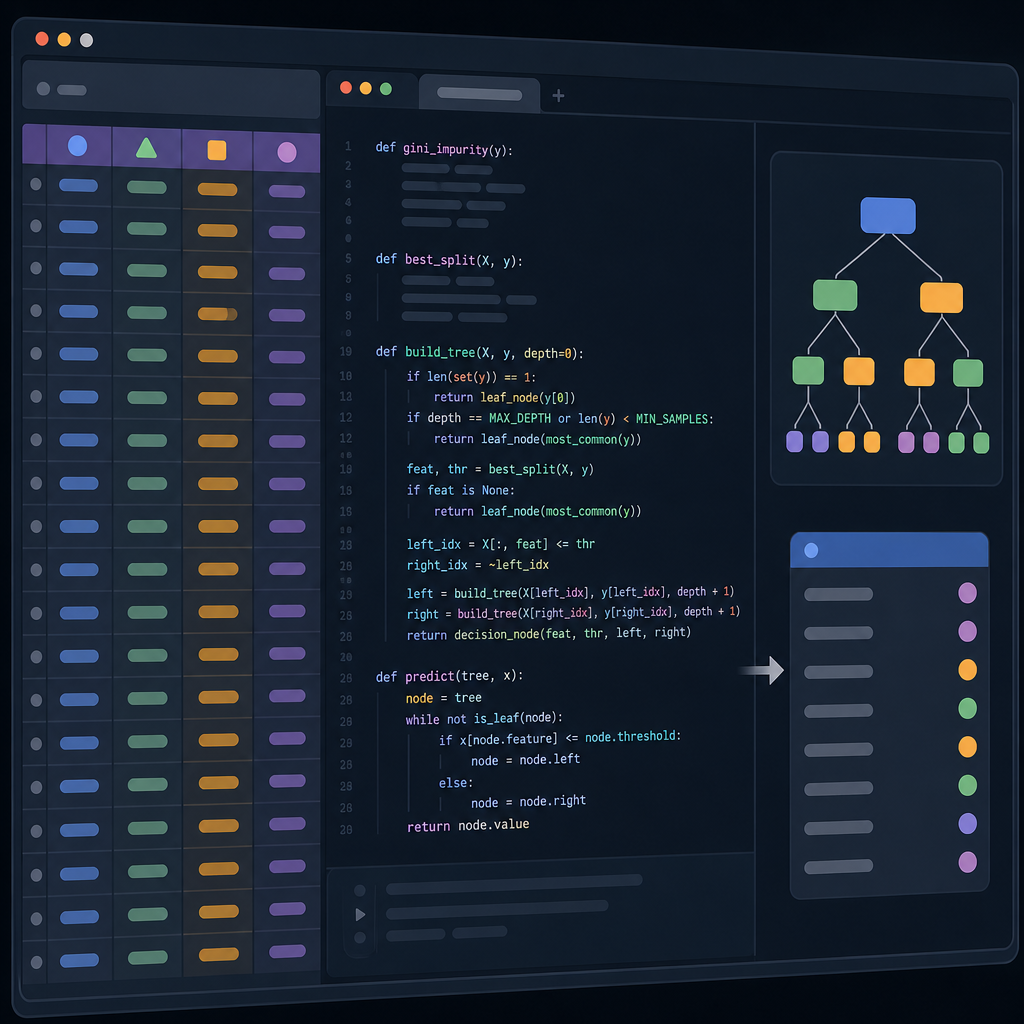
When exploring types of machine learning algorithms, it’s helpful to start with the three main categories:
| Category | Description | Example Use Case | Data Type |
|---|---|---|---|
| Supervised Learning | Trains on labeled datasets to map inputs to outputs. | Predicting house prices based on size and location. | Labeled Data |
| Unsupervised Learning | Finds patterns and groupings in unlabeled data. | Customer segmentation for targeted marketing. | Unlabeled Data |
| Reinforcement Learning | Learns by trial, rewards, and penalties through interaction. | Robotics navigation and game AI. | Environment Interaction |
How Supervised Learning Works: A Simple Flow
Getting Started: How to Learn Machine Learning Algorithms Step by Step
Starting your journey in machine learning for beginners might seem overwhelming, but following a structured approach makes it manageable:
- Understand the Basics: Learn core concepts like data types, features, and labels.
- Study Key Algorithms: Start with linear regression, decision trees, and KNN.
- Practice with Real Data: Experiment on platforms like Kaggle or UCI Repository.
- Explore Code and Tutorials: Follow beginner-friendly coding tutorials.
- Join the Community: Participate in forums and webinars for ongoing learning.
Machine Learning Algorithms Explained Simply
Let’s dive into a few of the best machine learning algorithms for beginners to get a clearer picture:
Linear Regression
This algorithm predicts a continuous outcome based on one or more features. It’s straightforward and widely used for predictive analysis.
Decision Trees
Decision trees split data into branches based on feature decisions, making classification problems easy to visualize and understand.
K-Nearest Neighbors (KNN)
KNN classifies data points by looking at the ‘k’ closest neighbors in the feature space, making it intuitive and easy to implement.
Clustering (K-Means)
This unsupervised learning algorithm groups data points into clusters based on similarity, making it handy for market segmentation.
Relative Complexity and Usage of Beginner Algorithms
* Bar length indicates relative beginner friendliness and conceptual simplicity.
Understanding these examples will help you get a grasp of how different algorithms function and where they can be applied.
Why Are Machine Learning Algorithms Important in 2026?
As of 2026, the landscape of machine learning is evolving rapidly. New trends are shaping how algorithms are applied across industries:
- Generative AI Integration: Machine learning algorithms are now often combined with generative AI to enhance content creation and business decision-making processes, making AI tools more versatile and powerful. [Forbes Technology Council]
- Real-time Data Processing in IoT: Algorithms deployed in IoT devices enable faster, privacy-conscious decisions locally on the device, giving rise to smarter systems everywhere. [TechTarget]
- Human-AI Collaboration: Collaborative systems are aiding in fields like medical image analysis and personalized education, improving outcomes while keeping humans in control. [Coursera]
- Automation and Supply Chains: AI-driven algorithms are optimizing supply chains and business operations, pushing the boundaries of operational efficiency. [Gartner]
For those curious about these applications or wanting to deepen their knowledge, resources like CodDesire’s machine learning books section provide up-to-date insights and learning material.
Tips for Beginners to Master Machine Learning Algorithms
- Start Small: Focus on understanding one algorithm at a time instead of trying to learn everything at once.
- Practice Regularly: Hands-on projects enhance your conceptual clarity and confidence.
- Use Visual Tools: Visualizing how algorithms split or cluster data can be a powerful way to understand their working.
- Stay Updated: The field evolves fast; following communities and blogs like those on CodDesire.com helps you stay current.
Frequently Asked Questions
What are the basic types of machine learning algorithms?
The basic types are supervised learning, unsupervised learning, and reinforcement learning. Each serves different purposes and uses different data types.
How do I start learning machine learning algorithms?
Begin with understanding core concepts, then learn basic algorithms step by step through tutorials and practice with real datasets. Resources from sites like CodDesire can be very helpful.
Which machine learning algorithms are easiest to understand?
Algorithms like linear regression, decision trees, and K-nearest neighbors are considered easy for beginners due to their straightforward logic and practical use cases.
What is the difference between supervised and unsupervised learning?
Supervised learning uses labeled data with known outputs, while unsupervised learning works with unlabeled data to find hidden patterns or groups.
Sources and further reading
- Machine Learning Trends For 2026 – Forbes Technology Council
- Gartner Identifies Top Supply Chain Technology Trends for 2026
- 8 Trends Powering Machine Learning’s Dynamic New Roles – TechTarget
- 10 Machine Learning Algorithms to Know in 2026 – Coursera
For beginners wanting interactive learning experiences, the NexusAI platform by CodDesire is worth exploring for hands-on AI and ML tools designed to simplify complex concepts.