Python has become one of the most popular programming languages today, especially for web development. Whether you are a student, a beginner, a blogger, a small business owner, or a developer, learning Python can open up many opportunities in building dynamic, scalable, and maintainable websites and applications. This beginner-friendly guide will help you understand the basics of Python for web development and introduce you to essential frameworks and tools.
Why Choose Python for Web Development?
Python’s simplicity and readability make it an ideal choice for beginners and experienced developers alike. It provides a clean syntax that resembles natural language, making it easier to learn and use. For web development, Python offers powerful frameworks that help you build everything from simple websites to complex web applications efficiently.
One of the standout aspects of Python for web development is its versatility. You can use it for backend programming, handling databases, building APIs, automating tasks, and much more. Additionally, Python has a large supportive community and extensive libraries that speed up development.
What Is Python Used for in Web Development?
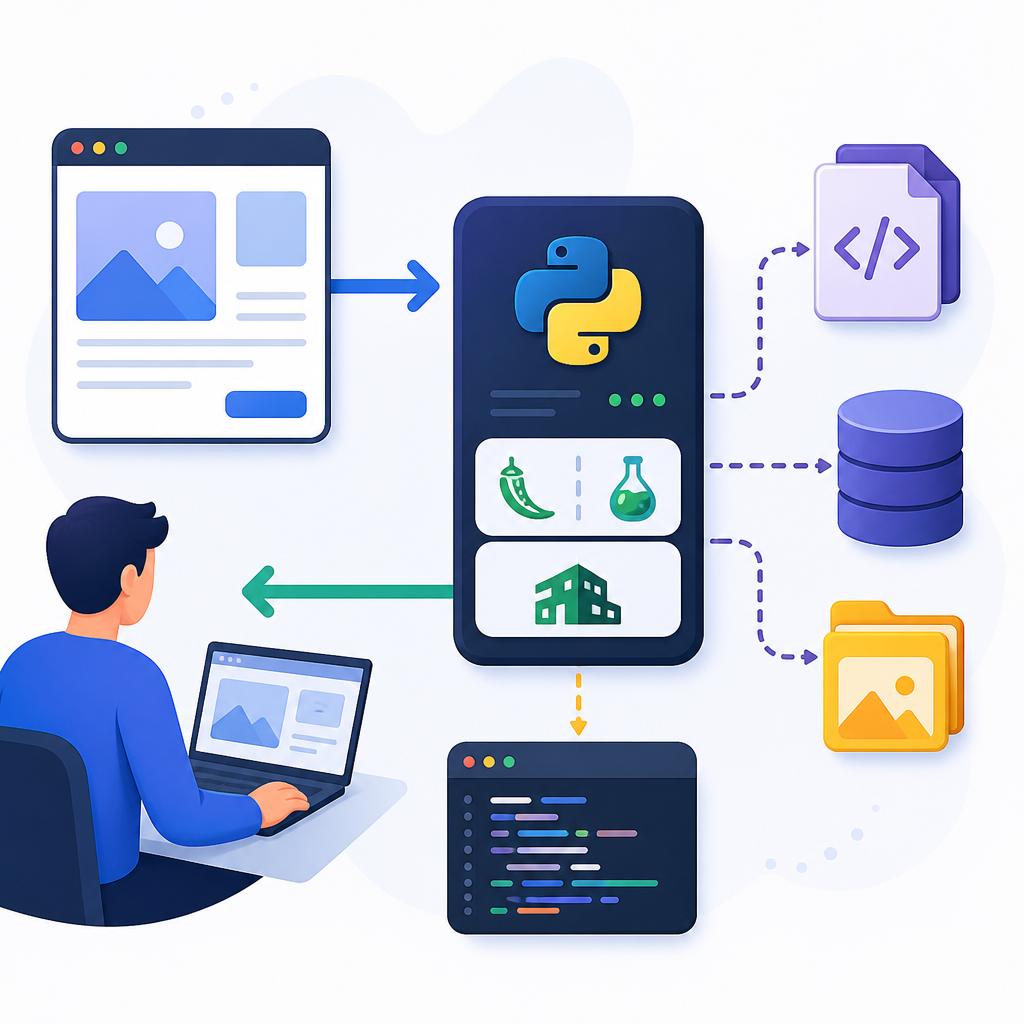
Python is mainly used on the server side (backend) of web development. It processes data, communicates with databases, handles user requests, and serves web pages. Frameworks like Django and FastAPI let you build APIs, full-fledged websites, and web services. Python also integrates well with front-end technologies like HTML, CSS, and JavaScript to deliver complete user experiences.
Getting Started: Python Basics for Developers
If you are new to programming, starting with Python basics is essential before diving into web development. Key concepts include:
- Variables and data types
- Control structures like loops and conditionals
- Functions and modules
- Working with files
- Understanding libraries and packages
You can check out Python tutorials for beginners at CodDesire.com to build a strong foundation. Learning Python programming step-by-step prepares you for the next stage: web development.
How to Use Python for Web Development
Once comfortable with the basics, you can start exploring how to use Python to develop web applications. It involves:
- Choosing a Python Web Framework: Frameworks provide tools and libraries you need to build web apps quickly. Popular choices include:
Popular Python Web Frameworks in 2026
- FastAPI: Currently the preferred framework for new Python web projects, FastAPI excels in speed, simplicity, and modern features. It’s ideal for building APIs and asynchronous web applications.
- Django: A robust, full-stack framework, Django offers an all-in-one solution with built-in admin panels, authentication, ORM, and more. It is excellent for complex applications requiring standard features out of the box.
- Flask: Flask remains useful for simpler applications or prototypes but is now considered more legacy compared to FastAPI and Django.
| Python Web Framework | Ideal Use Case | Features | Learning Curve |
|---|---|---|---|
| FastAPI | APIs, async web apps | High performance, modern features, async support | Moderate |
| Django | Full-stack complex applications | Admin, auth, ORM, batteries-included | Steep |
| Flask | Simple apps, prototypes | Minimalistic, flexible, lightweight | Easy |
Choosing the right framework depends on your project’s complexity, performance needs, and the learning curve you’re comfortable with.
- Setting up Your Development Environment: Install Python (preferably the latest stable version) and your chosen framework using pip, Python’s package installer.
- Developing Your First Web Application: Start small by creating a simple “Hello World” app. This helps you understand request handling, routing, and rendering responses.
- Learning Web Concepts: Familiarize yourself with HTTP methods (GET, POST), RESTful APIs, database integration, and templating engines.
Step-by-Step Process for Python Web Development Beginners
Beginner Guide to Python Web Frameworks
Let’s walk through a very basic example of using FastAPI, the leading framework in 2026, to create a simple web API:
from fastapi import FastAPI

app = FastAPI()

@app.get("/")
def read_root():
    return {"Hello": "World"}
In this example, @app.get("/") defines a route for the home page that returns a JSON response. FastAPI takes care of setting up a web server for you, so you can quickly test and grow your app.
For Django, you’d typically use commands to create projects and apps, then define URL routes and views that handle requests. Flask’s approach is similar but more minimalistic.
Tips for Learning Python Web Development Effectively
- Follow a structured web development tutorial that covers both Python basics and framework usage.
- Build small projects or clone simple websites to practice coding and problem-solving.
- Use resources like NexusAI at CodDesire to get coding assistance and insights.
- Read the official documentation of the frameworks and engage with community forums.
- Stay updated with the latest Python developments—Python 3.16 is on the horizon with exciting features.
Practical Python Web Development Checklist for Beginners
- ☑ Install the latest Python version
- ☑ Choose a suitable web framework (FastAPI, Django, Flask)
- ☑ Set up a virtual environment for your project
- ☑ Create a simple “Hello World” web app
- ☑ Explore routing, request handling, and responses
- ☑ Learn the basics of HTTP methods and REST APIs
- ☑ Connect your app to a database (SQLite, PostgreSQL)
- ☑ Practice by building small projects regularly
FAQs About Python for Web Development
Is Python Good for Web Development Beginners?
Absolutely! Python’s readable syntax and extensive tutorials make it one of the best languages for beginners in web development.
How Do I Start Learning Python for Web Development?
Begin with mastering Python basics, then choose a web framework like FastAPI or Django. Follow step-by-step web development guides and build projects to practice.
What Are Popular Python Web Frameworks?
As of 2026, FastAPI leads new projects, Django is a comprehensive full-stack option, and Flask suits simpler applications.
What Is Python Used for in Web Development?
Python is mainly used for server-side development, building web services, APIs, handling databases, and managing backend logic.