Python for web development has become an essential skill for many beginners, students, bloggers, and small business owners wanting to create dynamic, scalable websites and web applications. Known for its simplicity and readability, Python is not only beginner-friendly but also powerful enough to build complex web solutions. In this guide, we will explore Python web development basics, popular Python web frameworks, and tips on how to start your journey with Python for web development in 2026.
Why Choose Python for Web Development?
Python’s clear syntax and extensive standard libraries make it an ideal language for beginners looking to build websites and web applications. Beyond its ease of use, Python offers a rich ecosystem of frameworks that cater to various project sizes and needs. Whether you want a lightweight solution or a comprehensive toolkit, Python’s web frameworks provide the flexibility to develop efficiently.
What is Python Used for in Web Development?
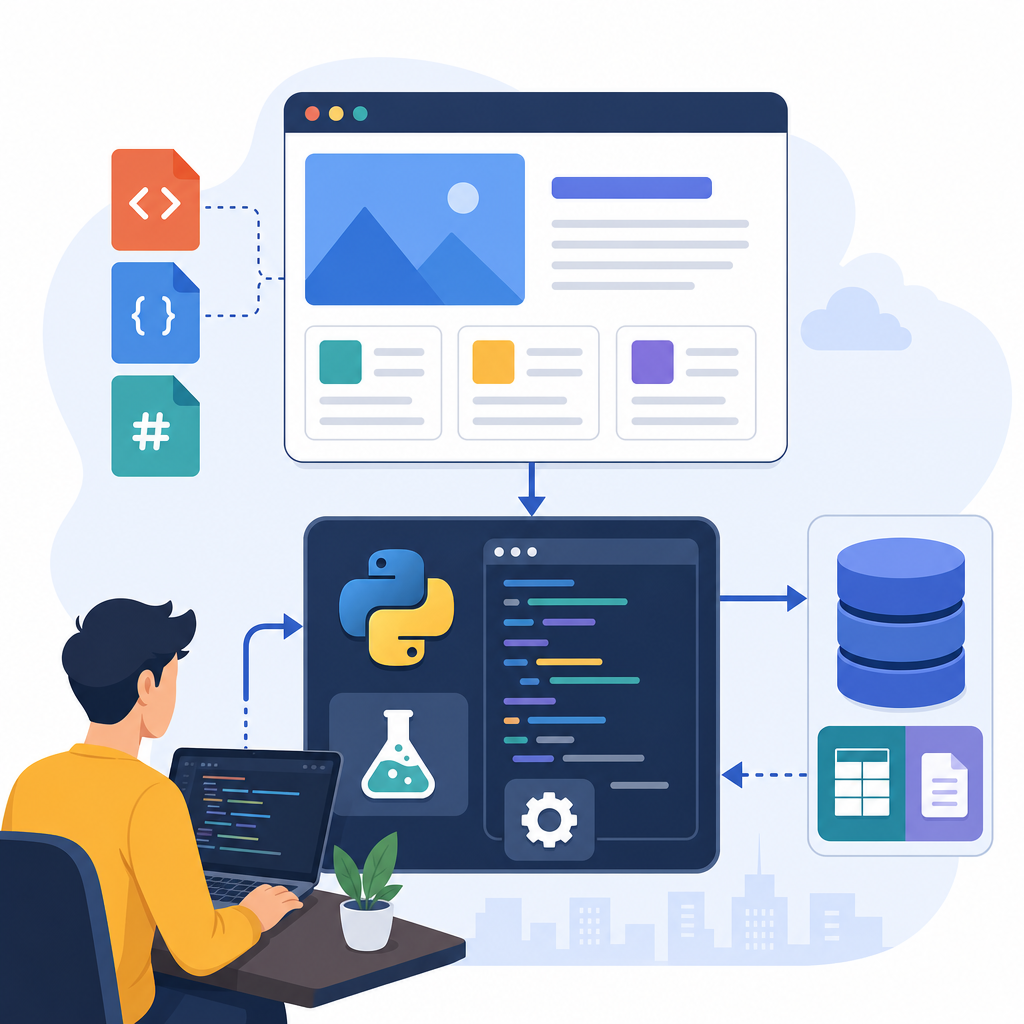
Python is widely used for backend development, handling server-side logic, database interactions, user authentication, and API creation. It allows developers to build functional, secure, and maintainable web applications. Popular Python frameworks such as Flask, Django, and FastAPI each offer distinct advantages tailored to different project requirements.
Key Takeaway: Why Python Excels in Web Development
Python balances simplicity with power, offering beginner-friendly syntax alongside professional-grade web frameworks. It supports rapid prototyping and scalable production applications, making it an excellent choice for a wide range of web projects.
Beginner Python Web Development: Getting Started
If you are new to programming or web development, learning Python for web is a great way to start because of its straightforward syntax and vast support community. Here’s a simple roadmap to begin:
Understand variables, loops, functions, and data structures.
Basics of how the web works, HTML, CSS, and HTTP protocols.
Start with beginner-friendly frameworks like Flask or Django.
Practice by creating blogs, portfolios, or small business websites.
Popular Python Web Frameworks in 2026
Frameworks help simplify web development by providing ready-to-use components and tools. As of 2026, the top Python web frameworks are:
| Framework | Best For | Key Features | Ideal Use Cases |
|---|---|---|---|
| Flask | Beginners & Small Projects | Lightweight, flexible, minimal setup | Blogs, portfolios, small apps |
| Django | Full-Featured, Large Applications | ORM, authentication, admin panel | Data-driven apps, eCommerce |
| FastAPI | Modern APIs & High Performance | Async support, auto docs, speed | RESTful APIs, microservices |
Flask
Flask is a lightweight and flexible micro-framework that’s perfect for beginners and small to medium projects. It allows you to build web applications quickly without much overhead, making it ideal to learn the principles of Python web development.
Django
Django is a full-featured framework that comes with built-in components like an ORM (Object-Relational Mapper), authentication system, and an admin interface. It’s great for larger, data-driven applications and offers a “batteries-included” approach, meaning many tools are ready to go out of the box.
FastAPI
FastAPI has gained popularity for building high-performance APIs. It features asynchronous programming support and automatic OpenAPI documentation generation. FastAPI is a great choice if you want to develop modern web APIs efficiently.
Step by Step Guide to Python Web Development for Beginners
Here’s a practical workflow to help you get hands-on experience:
venv.Python Web Development Tips for Small Business Owners
If you’re a small business owner thinking about using Python to build your online presence, here are some helpful tips:
- Start Small: Begin with a simple website or blog using a lightweight framework like Flask.
- Focus on Functionality: Prioritize features that directly benefit your customers, such as contact forms, product galleries, or booking systems.
- Leverage Existing Tools: Use open-source libraries and plugins to save development time.
- Secure Your Application: Use recommended security practices like HTTPS, input validation, and secure authentication.
- Keep Learning: Python’s web development ecosystem evolves. Stay updated with the latest frameworks and best practices.
Addressing Common Questions
Which Python Framework is Best for Beginners?
Flask is often regarded as the best Python framework for beginners due to its simplicity and flexibility. It allows you to learn web development concepts without much complexity, but you can also scale your project as needed.
How Hard is it to Learn Python for Web Development?
Python’s clear syntax and extensive documentation make it relatively easy to learn compared to other programming languages. With consistent practice and good tutorials, even beginners can become proficient in Python web development in a few months.
Can I Build a Website Using Only Python?
While Python handles backend development, you’ll also need HTML, CSS, and often JavaScript to create the frontend (the user interface). Python frameworks can serve these frontend files and handle dynamic content generation, but a full website involves combining these technologies.
Practical Resources for Learning Python Web Development
For a structured learning experience, consider exploring Python programming books that include web development topics. Additionally, interactive tools like Nexus AI by CodDesire can provide hands-on coding assistance tailored to your learning pace.
Sources and Further Reading
- Python 3.14.6 Documentation – Official documentation with the latest updates on Python.
- Python Web Development: Learn the Basics Today – A beginner-friendly guide covering Flask and Django frameworks.
- Python Roadmap 2026 – A detailed roadmap for mastering Python including web development.
- Python Web Developer Roadmap 2026 – Video guide outlining essential frameworks and tools for web developers.
If you’re ready to dive deep into web development, starting with Python offers a practical, enjoyable path forward. The language’s evolving frameworks keep pace with modern needs, empowering beginners and professionals alike to create remarkable web experiences.