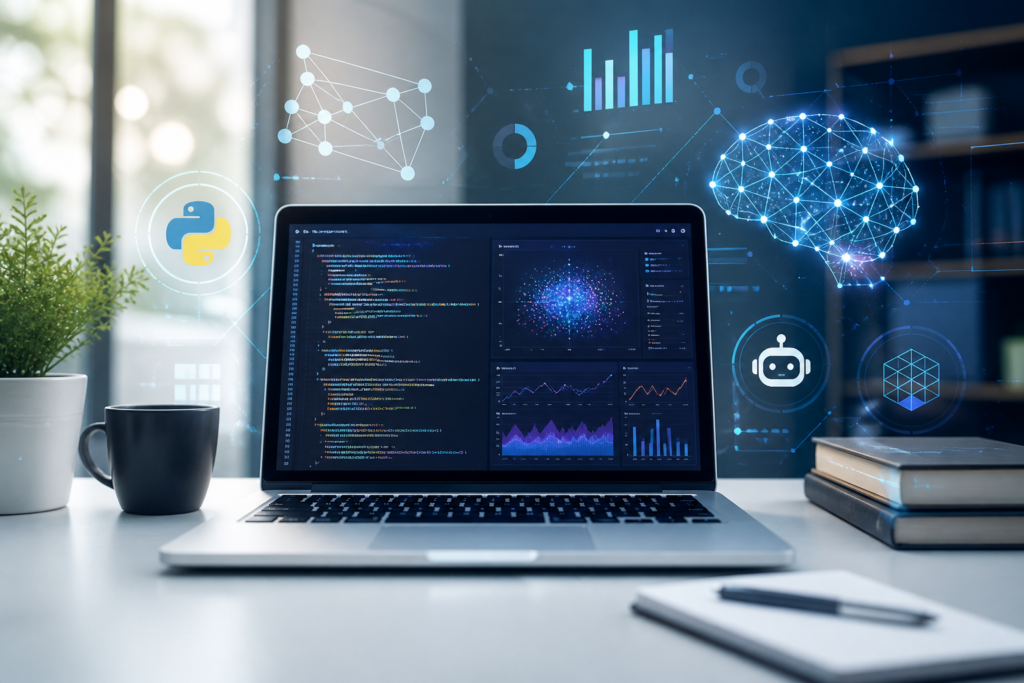
Machine learning has become an essential skill for students, bloggers, small business owners, and developers wanting to unlock the power of data. With Python as the leading programming language for machine learning in 2026, the journey to mastering it has never been clearer or more accessible. This beginner-friendly guide will take you step by step through the basics of machine learning with Python, helping you confidently build your first models and understand key concepts.
What is Machine Learning and How Do I Get Started?
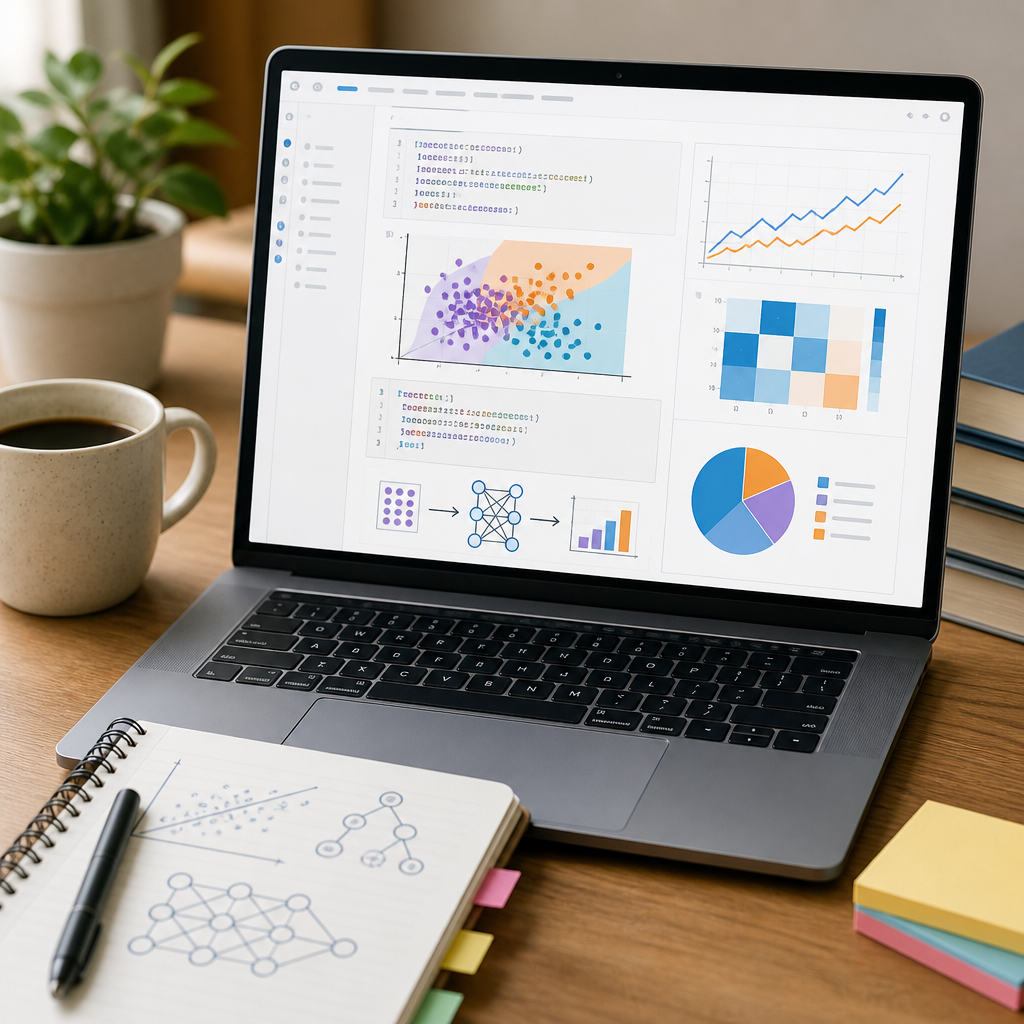
At its core, machine learning is a subset of artificial intelligence that enables computers to learn patterns from data and make predictions or decisions without being explicitly programmed for specific tasks. If you’re new to the field, the best starting point is to grasp machine learning basics in Python by understanding the types of machine learning:
- Supervised Learning: Learning from labeled data to predict outcomes.
- Unsupervised Learning: Finding hidden patterns in unlabeled data.
- Reinforcement Learning: Learning through trial and error interactions.
For beginners, supervised learning with Python is the easiest to start with, as it involves working with datasets where input-output pairs are known.
- Supervised Learning: Uses labeled datasets to train models that predict outcomes, e.g., classifying spam emails.
- Unsupervised Learning: Finds hidden patterns without labeled data, e.g., customer segmentation clusters.
- Reinforcement Learning: Involves learning via rewards and penalties, often used in game AI or robotics.
Why Choose Python for Machine Learning?
Python’s simplicity and readability make it ideal for beginners. Moreover, its rich ecosystem includes powerful libraries that streamline machine learning development. Today, beginner-friendly machine learning Python tutorials often highlight libraries such as:
- NumPy: For numerical operations and arrays.
- pandas: For data manipulation and analysis.
- scikit-learn: A comprehensive tool for building traditional machine learning models.
- PyTorch and TensorFlow: For deep learning and advanced models.
Understanding these tools forms the foundation of mastering machine learning with Python.
| Library | Purpose | Best For | Beginner Friendly |
|---|---|---|---|
| NumPy | Numerical computing and arrays | Math operations & data prep | High |
| pandas | Data manipulation & analysis | Handling structured data | High |
| scikit-learn | Machine learning algorithms | Regression, classification, clustering | Very High |
| TensorFlow/PyTorch | Deep learning frameworks | Neural networks & advanced models | Medium (Steeper learning curve) |
Step by Step Machine Learning Tutorial Python Beginners Can Follow
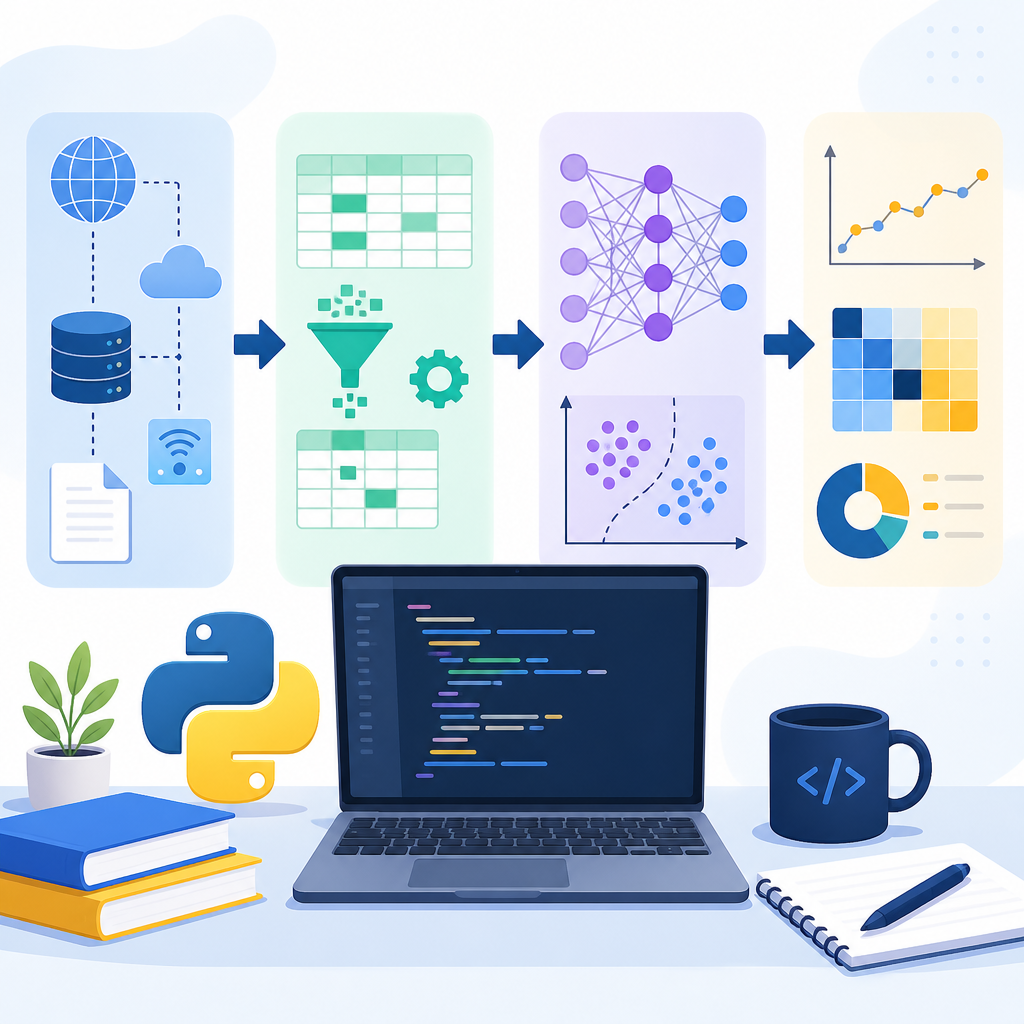
Here’s a simplified workflow for your first machine learning project:
Python Machine Learning Examples for Beginners
Suppose you want to predict house prices based on features like size and location. Using scikit-learn, your Python code might look like this:
import pandas as pd
from sklearn.model_selection import train_test_split
from sklearn.linear_model import LinearRegression
from sklearn.metrics import mean_squared_error

# Load data
data = pd.read_csv('house_prices.csv')

# Prepare features and target
X = data[['size', 'location_score']]
y = data['price']

# Split data
X_train, X_test, y_train, y_test = train_test_split(X, y, test_size=0.2, random_state=42)

# Create and train model
model = LinearRegression()
model.fit(X_train, y_train)

# Predict and evaluate
predictions = model.predict(X_test)
mse = mean_squared_error(y_test, predictions)
print(f'Mean Squared Error: {mse}')
This basic example introduces you to a typical supervised learning task using Python.
Best Machine Learning Libraries for Python Beginners
If you wonder, “Which Python libraries are best for machine learning?”, the following are ideal starting points:
- scikit-learn: Best for traditional algorithms like regression, classification, clustering. It’s beginner-friendly and well-documented.
- pandas: Critical for data handling and preprocessing.
- NumPy: Helps with matrix operations essential for machine learning math.
- Matplotlib and Seaborn: Useful for visualizing data insights and results.
- PyTorch: For learners ready to explore neural networks and deep learning.
Beginner Machine Learning Projects to Try
Start with simple projects like:
- Predicting house prices (regression)
- Classifying emails as spam or not spam (classification)
- Recommending products based on user preferences (recommendation systems)
- Fruit classification with images using scikit-learn (from Python Skillset’s guide)
These projects help you practice how to implement machine learning with Python for beginners and build confidence.
Can I Learn Machine Learning Without Prior Programming Experience?
Absolutely. Many learners begin with no coding background and succeed by following structured learning plans. Resources like Use Learn AI’s 30-Day Plan break down topics into manageable steps, starting from Python basics to deploying models. Platforms like CodDesire books section offer beginner-friendly materials to help you learn at your own pace.
Integrating Python with Modern Machine Learning Frameworks: A 2026 Perspective
As of 2026, Python’s role in machine learning continues to expand with frameworks like TensorFlow and PyTorch offering tools for both beginners and professionals. After mastering machine learning algorithms Python beginners guide essentials, exploring deep learning frameworks is a natural progression. Courses such as Simplilearn’s Machine Learning With Python Full Course 2026 provide extensive tutorials covering data preprocessing, model training, evaluation, and deployment using modern Python frameworks.
Machine learning with Python is approachable for beginners by leveraging simple libraries like scikit-learn and focusing on manageable projects. Consistent practice, exploring foundational concepts first, and gradually moving towards advanced frameworks will ensure long-term success and mastery.
FAQ: Machine Learning with Python for Beginners
What is machine learning and how do I get started?
Machine learning is teaching computers to learn from data to make predictions or decisions. Start by learning Python programming basics, then explore libraries like scikit-learn to build simple models.
Which Python libraries are best for machine learning?
For beginners, scikit-learn, pandas, and NumPy are essential. Later, you can advance to frameworks like PyTorch and TensorFlow for deep learning.
Can I learn machine learning without prior programming experience?
Yes, many beginners start without coding knowledge. Structured tutorials and courses ease the learning curve, starting with Python fundamentals.
How do I build a basic machine learning model in Python?
Load your data, preprocess it, split into training and test sets, select a model (e.g., Linear Regression), train it on the data, and evaluate its performance with appropriate metrics.
Sources and further reading
- Machine Learning With Python Full Course 2026 | Simplilearn
- Machine Learning Engineer Learning Path 2026 — SuperML.org
- Getting Started with Machine Learning in 2026 (30-Day Plan) — Use Learn AI
- Machine Learning for Beginners: A Complete Guide with Python Project — Python Skillset
By following these steps and utilizing available resources, your journey into machine learning with Python for beginners will be productive and rewarding. For more tutorials, books, and practical guides, explore CodDesire.com and keep honing your skills in this exciting field.