Machine learning is becoming an essential skill across many fields—from data analysis and software development to business decision-making and AI innovation. If you are a student, beginner, blogger, small business owner, or developer interested in diving into the world of machine learning, Python is the best programming language to start with. This beginner’s guide will walk you through machine learning with Python for beginners, explaining core concepts, essential tools, and practical first projects you can undertake.
Why Choose Python for Machine Learning?
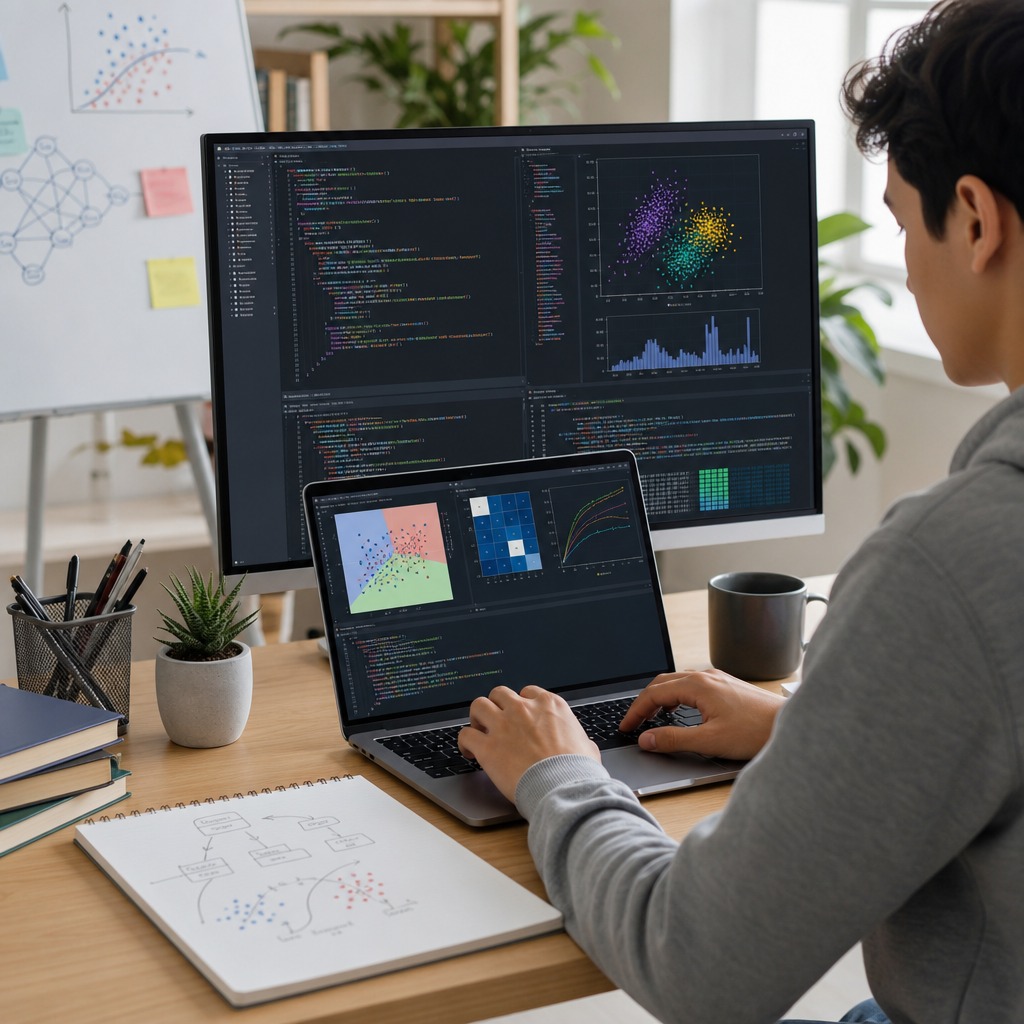
As of 2026, Python remains the dominant language for machine learning and artificial intelligence development. Its popularity stems from its simplicity, readability, and a powerful ecosystem of libraries specifically designed for data analysis and machine learning. For beginners, Python’s gentle learning curve, combined with rich documentation and community support, makes it the easiest choice to start your AI journey.
Top Benefits of Python for Machine Learning Beginners
- Easy Syntax: Python’s syntax is clear and concise, reducing the learning barrier.
- Extensive Libraries: Libraries like NumPy, pandas, scikit-learn, and PyTorch offer ready-made functions to handle tasks without building everything from scratch.
- Support for AI Tools: Modern workflows integrate AI tools for assistance in coding and model tuning.
- Strong Community: Many tutorials, forums, and resources help troubleshoot and learn effectively.
Getting Started: Python Machine Learning Basics
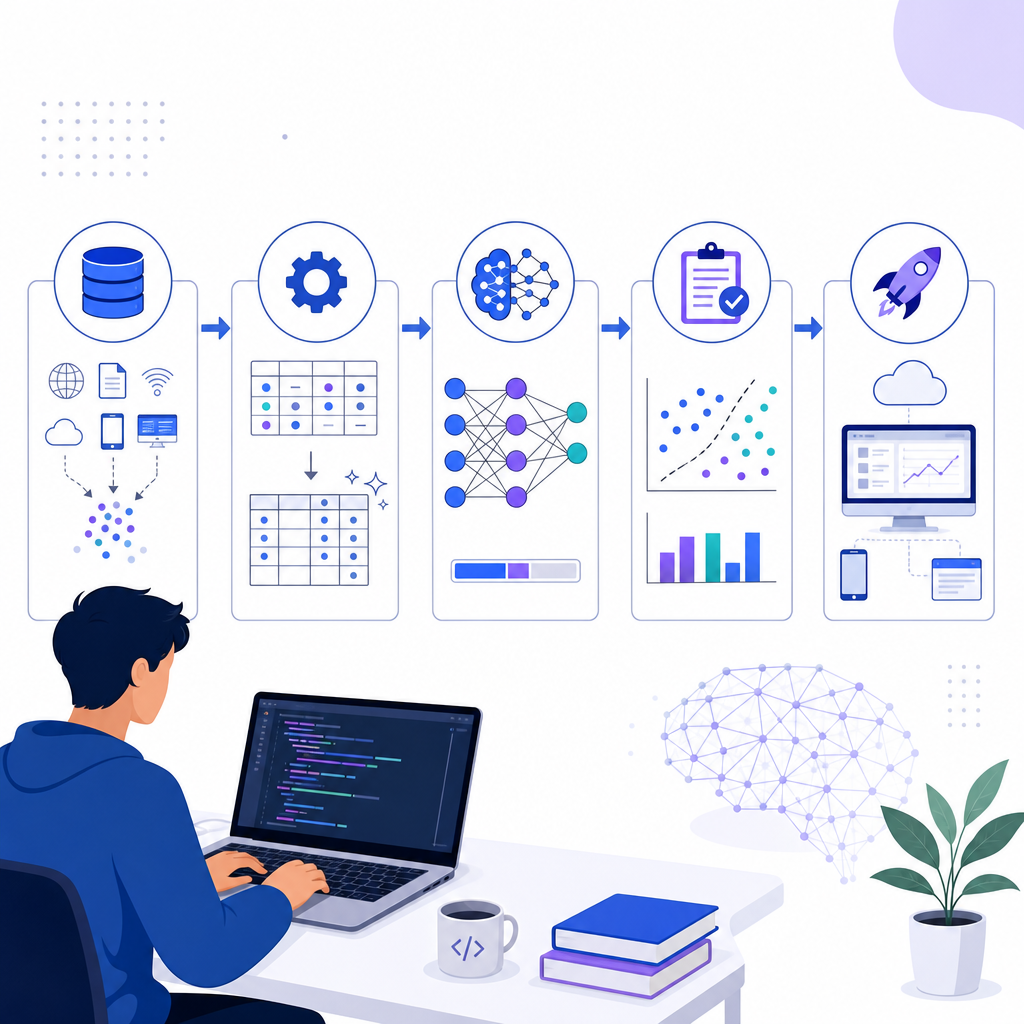
Before diving into machine learning algorithms, it’s crucial to build a foundation in Python programming and understand basic data operations. Here’s a simple step-by-step guide to begin:
1. Learn Python Fundamentals
Focus on understanding variables, data types, loops, conditionals, functions, and classes. Online platforms and books can help you with this stage.
2. Get Familiar with Data Handling Libraries
Learn to manipulate data using NumPy for numerical computations and pandas for data analysis and manipulation. These libraries form the backbone of data preparation.
3. Understand Basic Machine Learning Concepts
Get introduced to concepts such as supervised vs. unsupervised learning, training vs. testing data, and performance evaluation metrics like accuracy and Mean Squared Error.
4. Explore the scikit-learn Library
scikit-learn is an excellent library for beginners. It contains simple and effective tools for data mining and analysis and supports various algorithms such as linear regression, decision trees, and clustering.
5. Experiment with Beginner Machine Learning Projects
Try easy machine learning projects like predicting house prices, classifying emails as spam or not, or handwriting recognition using datasets available online. Practical projects help solidify your understanding and build confidence.
- ✔ Learn Python basics (variables, loops, functions)
- ✔ Practice with NumPy and pandas for data handling
- ✔ Understand supervised and unsupervised learning
- ✔ Explore scikit-learn algorithms
- ✔ Build simple projects using public datasets
Step-by-Step Machine Learning Guide Using Python
Here is a practical overview of implementing a simple machine learning project:
- Import Libraries: Load necessary libraries such as pandas, NumPy, and scikit-learn.
- Load Dataset: Use built-in or external datasets to train your model.
- Data Preprocessing: Clean the data, handle missing values, and convert categorical variables.
- Split Data: Divide your data into training and testing sets.
- Select Model: Choose an algorithm (e.g., linear regression for prediction).
- Train Model: Fit your model on the training data.
- Evaluate Performance: Test the model on test data and measure accuracy or error.
- Make Predictions: Use the model to predict on new data.
This step-by-step approach helps beginners follow a clear path without getting overwhelmed by complex theory initially.
Best Python Libraries for Machine Learning Beginners
When starting with Python AI coding, these libraries are essential:
- NumPy: Efficient numerical operations.
- pandas: Data manipulation and analysis.
- scikit-learn: Classic machine learning algorithms and utilities.
- Matplotlib & Seaborn: Data visualization.
- PyTorch: Deep learning framework gaining popularity for flexibility and power.
| Library | Primary Use | Skill Level | Beginners Friendly? |
|---|---|---|---|
| NumPy | Numerical computing | Beginner | ✔ Yes |
| pandas | Data manipulation | Beginner | ✔ Yes |
| scikit-learn | ML algorithms & utilities | Beginner to Intermediate | ✔ Yes |
| Matplotlib & Seaborn | Data visualization | Beginner | ✔ Yes |
| PyTorch | Deep learning framework | Intermediate to Advanced | ✘ Not for absolute beginners |
Begin with scikit-learn for classical ML and progress to PyTorch or similar when you want to explore deep learning models.
Integrating AI Tools into Your Workflow
One of the newest trends in machine learning with Python is using AI-assistants and workflow tools to boost productivity. These tools can help with:
- Code generation and debugging.
- Model tuning and hyperparameter optimization.
- Visualization and interpretation of results.
By embracing these AI tools, you can accelerate your learning process and focus more on creative problem-solving.
Frequently Asked Questions (FAQ)
What is the easiest way to learn machine learning with Python?
The easiest way is to start with Python fundamentals, followed by learning libraries like pandas and scikit-learn, and applying knowledge through small projects. Integrate AI tools for assistance and follow structured tutorials located on platforms like CodDesire.com and AI educational sites.
Which Python libraries are best for machine learning beginners?
Key libraries include NumPy, pandas, scikit-learn, Matplotlib, and PyTorch. These libraries cover data manipulation, visualization, classical ML algorithms, and deep learning frameworks.
Can beginners build machine learning projects with Python?
Absolutely. Beginners can work on straightforward projects like image classification, spam detection, or price prediction using publicly available datasets and libraries with guided tutorials.
How long does it take to learn machine learning with Python?
A realistic timeline is about 2-3 months of consistent study to understand basics and complete simple projects. More complex topics and deep learning may take longer, but structured plans make the process manageable and rewarding.
Sources and further reading
- Python for Machine Learning: The Complete Beginner Guide (2026)
- Machine Learning for Beginners: Roadmap to First Model
- Machine Learning for Beginners 2026: Scikit-learn, Algorithms and Workflow
- How to Learn Machine Learning in 2026: Step-by-Step Beginner Roadmap
If you are eager to dive deeper, CodDesire.com offers additional resources including books on Python and machine learning, and you can explore AI tool integrations at Nexus AI to enhance your learning journey.